Notes record what happened. AI memory influences what a system carries forward. That difference matters.
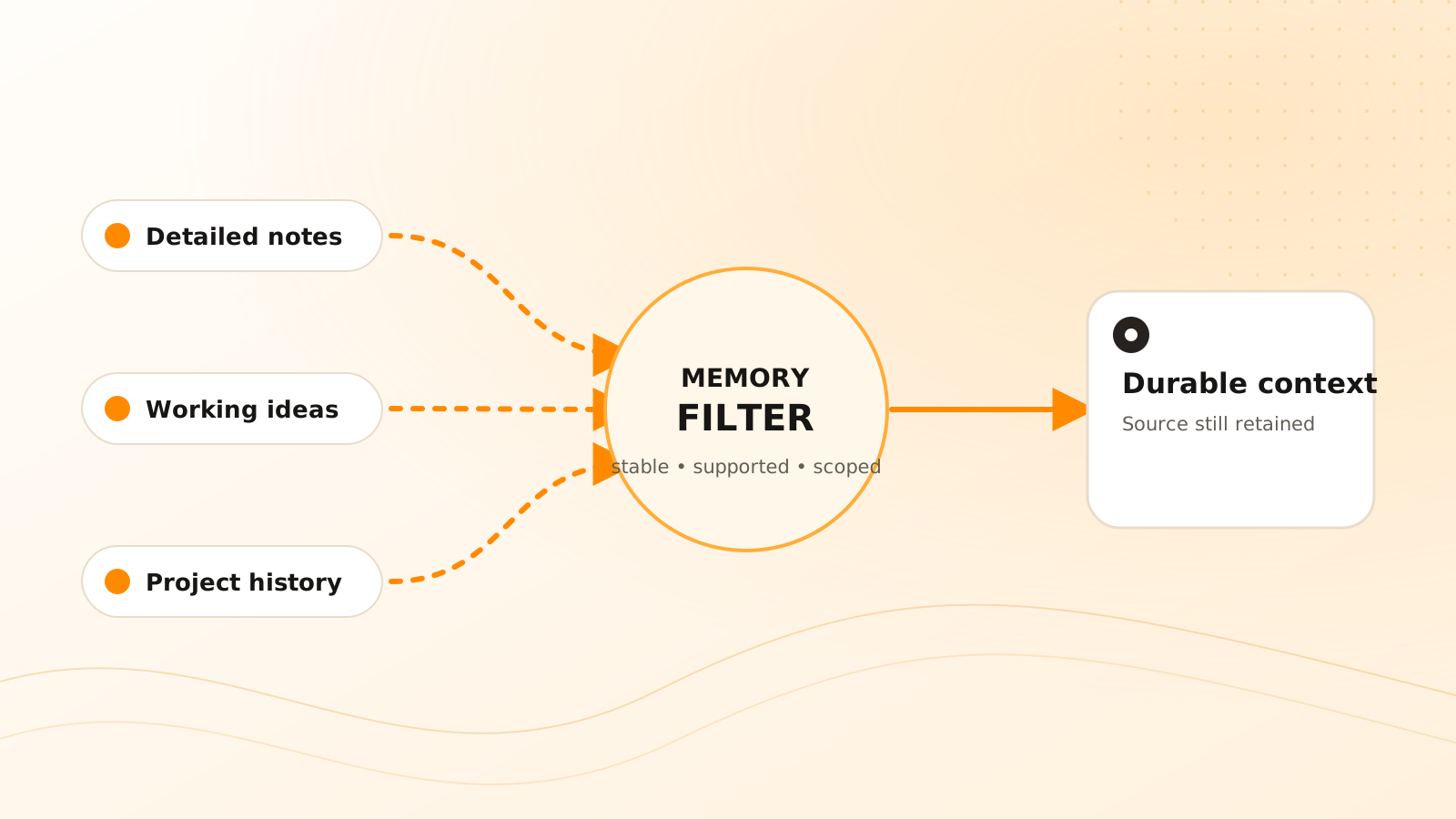
If every observation becomes durable memory, an old preference, early hypothesis, or temporary constraint can silently shape later answers. If nothing becomes memory, you must repeatedly restate stable context. A useful second brain needs a clear boundary between detailed records and reusable context.
What is the difference between a note and AI memory?
A note is an artifact you can retrieve: a meeting record, research observation, draft, decision log, or personal reflection. It can be long, uncertain, time-bound, and source-specific.
An AI memory is a compact piece of context intended to remain available across future interactions or retrieval. It may describe a stable preference, accepted decision, ongoing constraint, important relationship, or durable fact about a project.
The same event can produce both. A meeting note preserves the full discussion. A memory might preserve the final approved constraint, with a link back to that meeting.
Clear Tangle makes this boundary visible through more than one object: Captures and Pages retain detailed material, AI Memories hold personal preferences and facts, and Memory Vault preserves broader user or project context for ChatMind, planning, routing, and Agent Studio. That makes “remember this” a scoped product decision rather than a reason to overwrite the source note.
What belongs in a note?
Keep information as a note when it is:
- detailed source material;
- an idea that is still evolving;
- specific to one meeting or moment;
- useful mainly for audit or history;
- uncertain, contradictory, or awaiting a decision;
- sensitive enough that broader reuse would be inappropriate.
Notes can preserve nuance without asserting that every sentence should affect future behavior.
What belongs in durable AI memory?
Consider memory when the context is stable, repeatedly useful, and appropriate to carry forward. Examples include:
- “The client requires written approval before production changes.”
- “Use the
mainrepository as the product source of truth.” - “The author prefers concise technical explanations.”
- “Project Atlas uses the fiscal-year calendar defined in the planning page.”
- “Do not auto-publish AI-generated content without the agreed review gate.”
Each statement is useful beyond the source moment. It can influence future assistance and should be easy to inspect, correct, or remove.
Use a five-question memory test
Before promoting a note into memory, ask:
- 1Is it stable? Will it probably remain true beyond this week or conversation?
- 2Will it be reused? Does future work benefit from carrying it forward?
- 3Is it supported? Can you identify the decision or source behind it?
- 4Is its scope clear? Does it apply to one project, one person, or everything?
- 5Is it appropriate? Should the system retain and reuse this information at all?
If the answer to one of these is uncertain, keep the item as a note or mark the memory for review.
What goes wrong when memory is too broad?
Broad memory can turn a local statement into a global rule. “Use a formal tone for this legal memo” should not become “the user always prefers formal writing.” A temporary project pause should not make future planning assume the project is permanently inactive.
Time also changes truth. A team member, price, deadline, technical constraint, or product capability may become stale. Memory needs an owner, scope, or review signal when change is likely.
Sensitive context deserves special restraint. The ability to remember something is not the same as permission to retain it or use it in unrelated situations.
How should you maintain AI memory?
Keep memory useful and correctable
Create memory from a verified source
Preserve the accepted decision or stable fact and retain a path back to its evidence.
State the scope
Name the project, person, workflow, or period to which the memory applies.
Review what influences answers
Inspect active memories and correct wording that has become too broad or stale.
Resolve conflicts visibly
When newer evidence contradicts memory, update it and retain the decision history in notes.
Delete what should not persist
Remove expired or inappropriate context instead of allowing accumulation to become policy.
Clear Tangle documents its current memory behavior in AI Memories and Memory Vault. The guide to chatting with notes while keeping sources explains how source records support later verification.
Frequently asked questions
Should an AI remember every preference I mention?
No. A one-time instruction may belong only to the current task. Save a preference when it is stable, broadly useful within a clear scope, and something you want reused.
Can memory replace project documentation?
No. Memory should carry compact reusable context; project pages and notes should preserve detailed decisions, evidence, history, and changing plans.
How often should I review memories?
Review high-impact or change-prone memories more often, and review any memory immediately when it produces an incorrect assumption. A periodic monthly check is a practical baseline for active systems.
What is the difference between AI Memories and Memory Vault in Clear Tangle?
Use AI Memories for a reusable personal preference such as your preferred response style. Use Memory Vault for broader user or project context, such as an approved project constraint derived from captures, integrations, completed work, or historical records.
What should I do when a memory conflicts with a newer note?
Verify the newer evidence, update or remove the stale memory, and retain the detailed decision history in the note or project record. Do not let the older compact statement silently win.
The safest second brain remembers less than it stores. Keep rich evidence in notes, promote only durable context, and make every influential memory visible enough to challenge.
Keep durable context without losing the record
Use Clear Tangle Memory Vault for reusable context while retaining the notes and sources that explain where it came from.
Explore Memory Vault →Sources
- Clear Tangle AI Memories Documentation — supports the current memories model and management workflow.
- Clear Tangle Memory Vault Documentation — supports the current durable-memory and retrieval capabilities described here.
- How does Reference saved memories work? — OpenAI; provides a current example of how another AI product distinguishes saved memories from chat history and lets users manage them.